Carpenter Bees

Carpenter bees are pests around wood -- boring perfectly round holes for their nests.

Geographic Region

Carpenter bees can be found across the southern United States from California to Florida; and in the eastern United States, north to New York.

Natural Habitat

Carpenter bees inhabit a broad range of ecosystems from tropical to subtropical to temperate. They forage for food in vegetable and flower gardens and excavate wood for their nests.

Weather Conditions

Carpenter bees mate and lay eggs in spring, but remain active until early fall.  

Behavior

Carpenter bees are solitary bees. They make nests for their young by tunneling into wood, vibrating their bodies by chewing the wood with their mandibles. They prefer wood that is unpainted and weathered.

Unique Characteristics

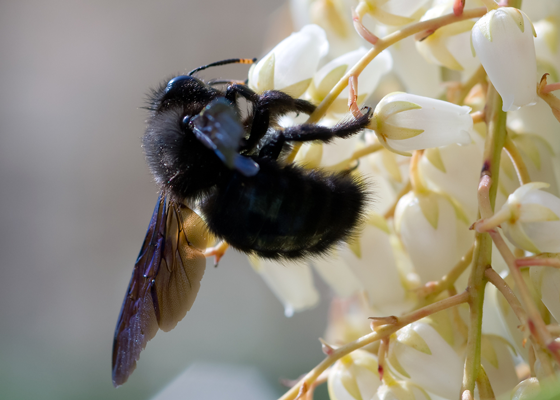
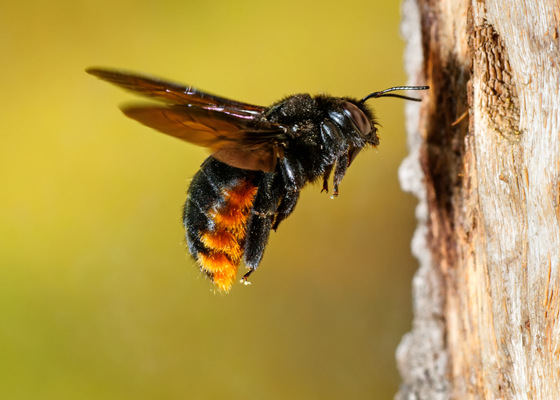
Carpenter bees are sometimes confused with bumblebees. The easiest way to tell the two apart is that most carpenter bees have a shiny abdomen, whereas bumblebee abdomens are covered with thick hair. Here's a list of other differences between carpenter bees and bumblebees

Related Products
Carpenter bees are large, solitary bees that bore smooth, round holes into unpainted or untreated wood to create nests for their young. Unlike termites, they don’t eat wood — they excavate it, which can lead to cosmetic and even structural damage over time.
Look for perfectly round holes (about ½ inch in diameter) in wood surfaces such as eaves, decks, fences, or siding. You may also see large, black-and-yellow bees hovering near these areas in spring and early summer.
Femal carpenter bees can sting, though they are not aggressive and aren't likely to sting unless they are provoked. Males — which cannot sting — often buzz around people as a territorial behavior, which can be startling but not harmful. The biggest danger carpenter bees pose is to property. Left untreated, a carpenter bee infestation can cause serious damage to wooden structures.
Carpenter bees favor bare, untreated, or weathered wood because it’s easier to bore into. Painted, stained, or sealed wood is less attractive and can help deter nesting activity.
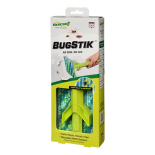
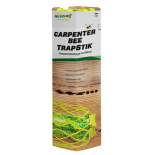
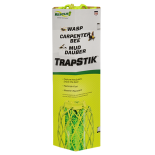
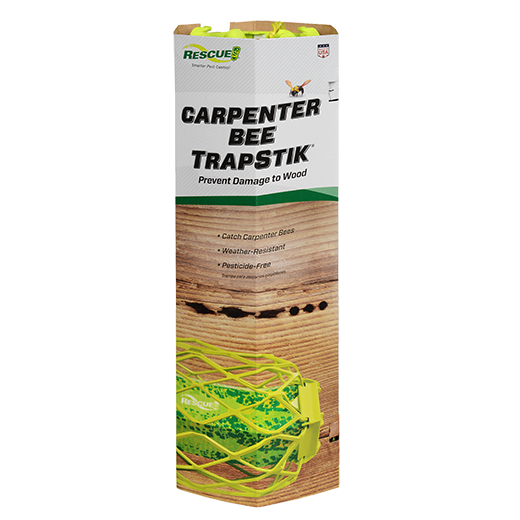
First, assess whether the holes are recent — fresh holes are clean and bright inside and will look like a freshly-drilled hole. You can fill old holes with wood putty after activity has ceased. For active populations, consider using a trap like the RESCUE! Carpenter Bee TrapStik to manage the population.
The RESCUE! Carpenter Bee TrapStik uses an adhesive surface combined with a visual lure that attracts carpenter bees (and other stinging insects) to land and become trapped. Hanging the Carpenter Bee TrapStik in an area with carpenter bee can help reduce the carpenter bee population and prevent further damage to wooden structures.
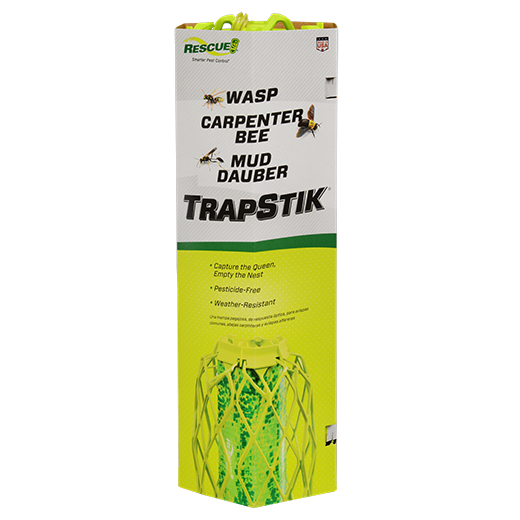
Yes. If you have multiple pest problems — for example, both carpenter bees and wasps or mud daubers — the RESCUE! Carpenter Bee TrapStik is a versatile option that uses the same lure and adhesive technology to help reduce multiple outdoor pest types with a single product.
Start by sealing or painting exposed wood surfaces, as carpenter bees prefer bare wood. Then place a RESCUE! Carpenter Bee TrapStik nearby where bees are active — the visual attractant lures carpenter bees to the adhesive surface before they have a chance to bore into wood. For severe carpenter bee problems, it's a good idea to use multiple traps.
Using a TrapStik won't attract more insects to an area where they aren't already a problem. Place the trap a short distance away from main activity areas like porches or doorways so it draws bees toward the trap and away from people and structures. Carpenter Bee TrapStik is designed to attract visually, so the trap needs to be placed in an area where insects can see it.
RESCUE! carpenter bee traps are designed to attract and trap target pests that bore into wood. They use a visual lure instead of scented baits, which can reduce the inadvertent attraction of pollinators like honey bees. When possible, place traps away from flowering plants or garden beds to reduce non-target catches.

Mar 26, 2024 | Outdoor Pests

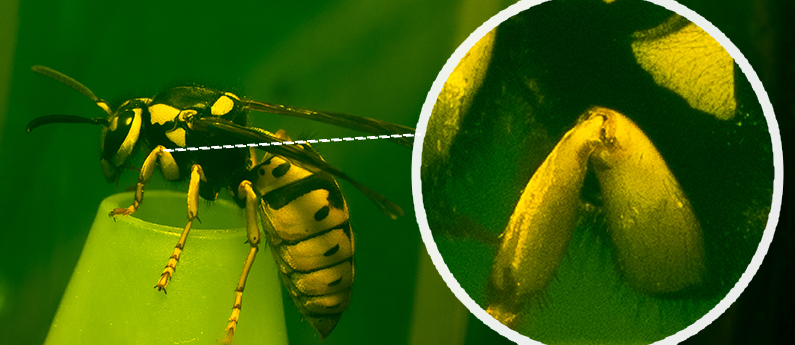
Do Bees Really Have Knees?

We attempt to answer a question few people have ever asked: do bees really have knees? The answer may surprise you.

Read More »