
 Ant Baits
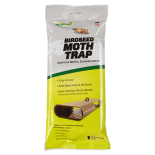 Birdseed Moth Trap
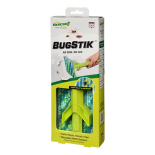 BugStik
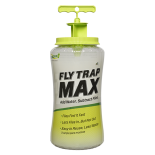 Fly Trap Max
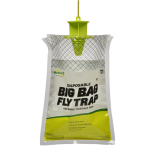 Fly Trap, Big Bag
 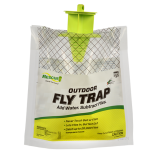 Fly Trap, Disposable
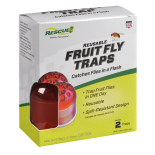 Fly Trap, Fruit Fly
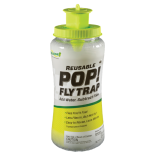 Fly Trap, POP! Fly
 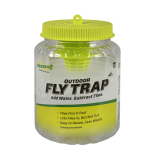 Fly Trap, Reusable
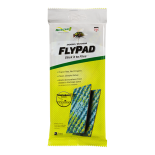 FlyPad
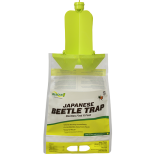 Japanese Beetle Trap
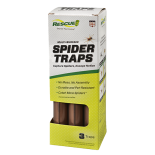 Spider Trap
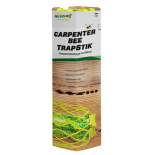 TrapStik, Carpenter Bee
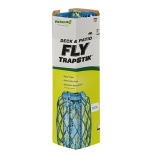 TrapStik, Deck & Patio Fly
 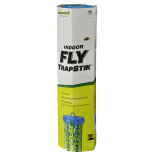 TrapStik, Indoor Fly
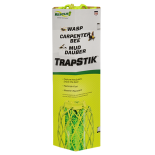 TrapStik, Wasp
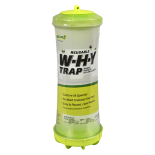 W·H·Y Trap for Wasps, Hornets & Yellowjackets
 Yellowjacket Trap, Disposable
  Yellowjacket Trap, Reusable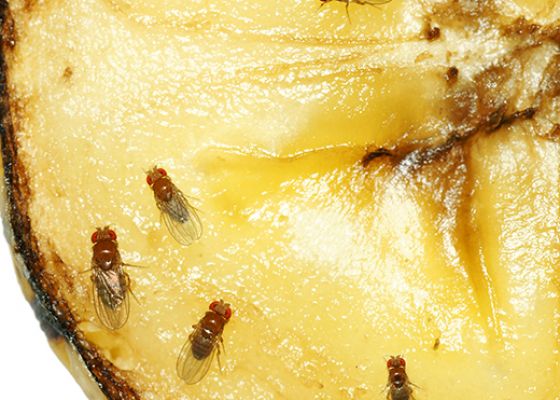
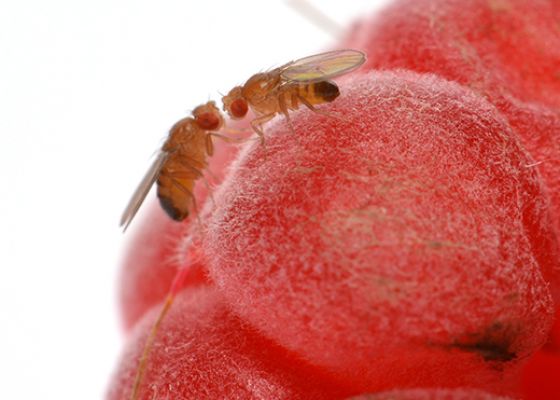
Fruit Flies
Fruit flies are small, gnat-like nuisance flies that hitch a ride into your house on produce or sneak in through window and door screens. They breed quickly in moist environments like sink drains.
Geographical Region
Fruit flies are found all around the world, especially in tropical regions.
Natural Habitat
Fruit flies are attracted to ripe fruits and vegetables. They breed in sink drains, garbage disposals, empty bottles and cans, trash containers and damp cleaning tools like rags and mops.
Weather Conditions
Fruit flies are a problem all year, but are especially common during late summer/fall because they are attracted to ripened or fermenting fruit and vegetables.
Behavior
Fruit flies swarm annoyingly in homes, restaurants, supermarkets, and other places where food is served or stored.
Unique Characteristics
- Fruit flies are tiny flies, typically pale yellow to reddish brown to black, with red eyes.
- Female fruit flies can lay up to 500 eggs.
Related Products
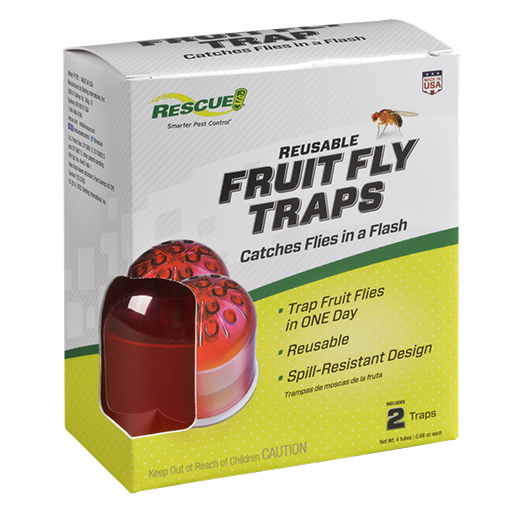
Fly Trap, Fruit Fly
This trap uses a food-based lure and color proven attractive to fruit flies. Sim...
VIEW PRODUCT »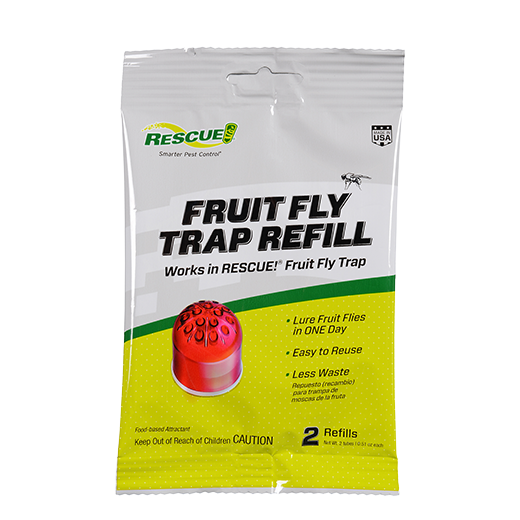
Fruit Fly Trap Refill
Includes two tubes of attractant, used together to last 30 days. Simply cut open...
VIEW PRODUCT »
Related Articles
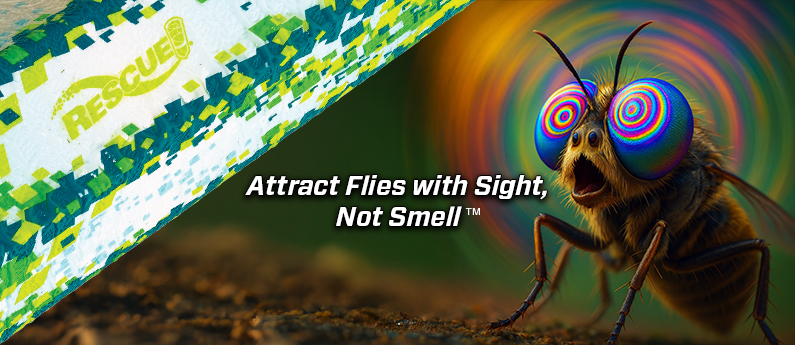
RESCUE!'s VisiLure technology uses colors and patterns—not odors—to attract flies and other pests. Learn how it works and the best places to use it in this article.
Read More »