
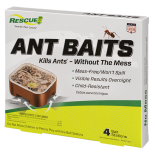
 Ant Baits
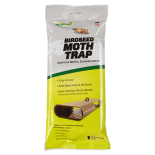 Birdseed Moth Trap
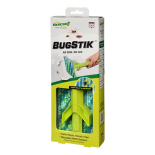 BugStik
 Fly Trap Max
 Fly Trap, Big Bag
  Fly Trap, Disposable
 Fly Trap, Fruit Fly
 Fly Trap, POP! Fly
  Fly Trap, Reusable
 FlyPad
 Japanese Beetle Trap
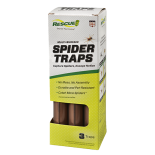 Spider Trap
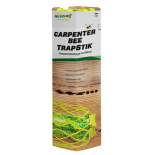 TrapStik, Carpenter Bee
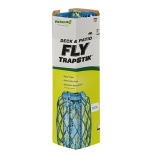 TrapStik, Deck & Patio Fly
 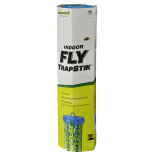 TrapStik, Indoor Fly
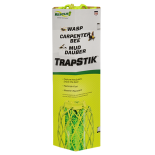 TrapStik, Wasp
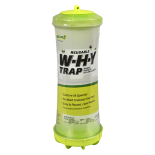 W·H·Y Trap for Wasps, Hornets & Yellowjackets
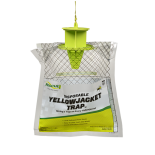 Yellowjacket Trap, Disposable
 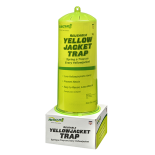 Yellowjacket Trap, Reusable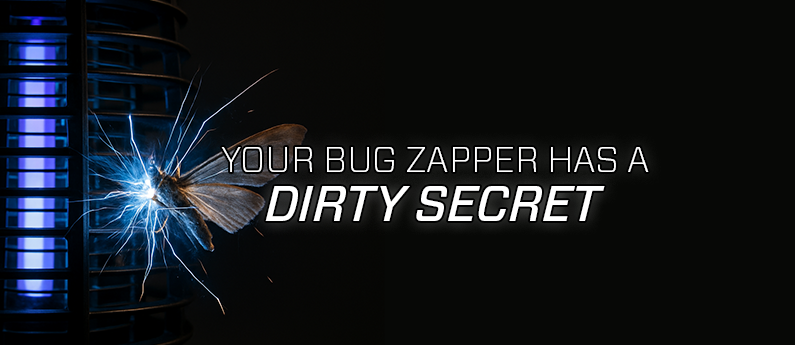
, to attract flying insects. Once an insect flies into the device, it touches two electrified grids separated by a tiny gap. That completes the circuit, and the insect is electrocuted — often with a loud “zap.”
At a glance: simple, satisfying, and seemingly effective. But that simplicity hides a number of serious drawbacks.
Bug Zappers Are Worse Than You Think
1. They kill mostly wrong bugs — beneficial ones.
Contrary to what many expect, bug zappers are usually terrible at catching mosquitoes (the biting pests most people care about). Instead, they disproportionately lure harmless — even helpful — insects such as moths, beetles, midges, and other pollinators or predators.
In one 1994 study, among almost 14,000 insects killed by zappers, just 31 (0.22%) were biting insects like mosquitoes or gnats. The rest were non-target species.
This is a big deal. Many of the insects being zapped naturally help with pollination, decomposition, or even controlling pest populations — so indiscriminately eliminating them can disrupt the ecosystem in your yard and beyond.
2. They may increase, not decrease, the mosquito problem.
Because bug zappers are inefficient at attracting actual mosquitoes (which are drawn more by carbon dioxide and body heat than UV light), they often fail to reduce biting-insect populations.
Worse — by killing many of the natural predators or competitors of mosquitoes (like predatory insects), zappers could inadvertently make your yard more hospitable to mosquitoes. That’s right: your trusty zapper might make the bug problem worse.
3. They spread germs, bacteria, and insect fragments — potentially into your food or air.
When an insect is electrocuted, it doesn’t just fall neatly into a tray. The force of the zap often blasts the insect apart into a fine mist, dispersing bug particles — bits of wings, legs, body — into the air.
Studies have shown that this mist can include bacteria and viruses that the insect was carrying. If the zapper is located near a dining or food-preparation area, those pathogens (or allergens from insect fragments) may settle on food, utensils — or become airborne.
Because of this risk, health- and food-safety experts recommend never placing bug zappers above a food prep area or where people are eating — especially outdoors at picnics or barbecues.
4. They can give you a misleading sense of security.
Because bug zappers are easy to install and seem effective, people often assume they solve the entire mosquito or pest problem. But because they mostly kill non-biting insects — and fail to target mosquitoes effectively — they can lull homeowners into complacency while letting real pest populations thrive.
That can lead to shock when biting insects and mosquitoes continue buzzing around anyway.
What to Do Instead — More Effective, Safer Alternatives
If your goal is to keep mosquitoes and biting flies away, consider these more targeted, eco-friendly, and safer methods:
Eliminate or reduce standing water and damp spots around your yard — this takes away mosquito breeding grounds.
Use insect repellents (DEET, citronella, etc.) or physical barriers (nets, screens, long-sleeved clothing) when outdoors.
Use devices designed specifically for mosquitoes — those that attract with carbon dioxide or other bait rather than UV light.
Encourage natural predators: bats, birds, and predatory insects often do a better job at controlling mosquito populations — and they don’t blow up in a spray of bug fragments.
Use insect traps that target specific types of insects, like RESCUE! Fly Traps and Yellowjacket traps.
Think Twice
Bug zappers are seductive in their simplicity: “set it and forget it,” and you’ll have fewer bugs. But the truth is more complicated.
They indiscriminately kill insects, wiping out helpful pollinators, natural pest-controllers, and other beneficial creatures. They often fail to tackle the biting pests that actually bother us. On top of that, they blast insect bits — potentially spreading bacteria or allergens — into the air or onto your food.
So the next time you’re tempted to plug in a zapper, consider instead approaches that are safer, smarter, and more sustainable for your yard.
RESCUE! Products are proudly made in the USA.
rescue.com™
)
Why You Might Want to Think Twice About Using a Bug Zapper
If you have a bug zapper hanging on your porch or patio, you’re not alone. They’re a popular and long-standing go-to for keeping pesky insects away. But before you plug one in, it’s worth knowing that bug zappers may do more harm than good — to your health, to beneficial insects, and even to your overall pest situation.
How Bug Zappers Work
A bug zapper — also known as an electronic insect-control system — uses a light, usually ultraviolet (UV), to attract flying insects. Once an insect flies into the device, it touches two electrified grids separated by a tiny gap. That completes the circuit, and the insect is electrocuted — often with a loud “zap.”
At a glance: simple, satisfying, and seemingly effective. But that simplicity hides a number of serious drawbacks.
Bug Zappers Are Worse Than You Think
1. They kill mostly wrong bugs — beneficial ones.
Contrary to what many expect, bug zappers are usually terrible at catching mosquitoes (the biting pests most people care about). Instead, they disproportionately lure harmless — even helpful — insects such as moths, beetles, midges, and other pollinators or predators.
In one 1994 study, among almost 14,000 insects killed by zappers, just 31 (0.22%) were biting insects like mosquitoes or gnats. The rest were non-target species.
This is a big deal. Many of the insects being zapped naturally help with pollination, decomposition, or even controlling pest populations — so indiscriminately eliminating them can disrupt the ecosystem in your yard and beyond.
2. They may increase, not decrease, the mosquito problem.
Because bug zappers are inefficient at attracting actual mosquitoes (which are drawn more by carbon dioxide and body heat than UV light), they often fail to reduce biting-insect populations.
Worse — by killing many of the natural predators or competitors of mosquitoes (like predatory insects), zappers could inadvertently make your yard more hospitable to mosquitoes. That’s right: your trusty zapper might make the bug problem worse.
3. They spread germs, bacteria, and insect fragments — potentially into your food or air.
When an insect is electrocuted, it doesn’t just fall neatly into a tray. The force of the zap often blasts the insect apart into a fine mist, dispersing bug particles — bits of wings, legs, body — into the air.
Studies have shown that this mist can include bacteria and viruses that the insect was carrying. If the zapper is located near a dining or food-preparation area, those pathogens (or allergens from insect fragments) may settle on food, utensils — or become airborne.
Because of this risk, health- and food-safety experts recommend never placing bug zappers above a food prep area or where people are eating — especially outdoors at picnics or barbecues.
4. They can give you a misleading sense of security.
Because bug zappers are easy to install and seem effective, people often assume they solve the entire mosquito or pest problem. But because they mostly kill non-biting insects — and fail to target mosquitoes effectively — they can lull homeowners into complacency while letting real pest populations thrive.
That can lead to shock when biting insects and mosquitoes continue buzzing around anyway.
What to Do Instead — More Effective, Safer Alternatives
If your goal is to keep mosquitoes and biting flies away, consider these more targeted, eco-friendly, and safer methods:
- Eliminate or reduce standing water and damp spots around your yard — this takes away mosquito breeding grounds.
- Use insect repellents (DEET, citronella, etc.) or physical barriers (nets, screens, long-sleeved clothing) when outdoors.
- Use devices designed specifically for mosquitoes — those that attract with carbon dioxide or other bait rather than UV light.
- Encourage natural predators: bats, birds, and predatory insects often do a better job at controlling mosquito populations — and they don’t blow up in a spray of bug fragments.
- Use insect traps that target specific types of insects, like RESCUE! Fly Traps and Yellowjacket traps.
Think Twice
Bug zappers are seductive in their simplicity: “set it and forget it,” and you’ll have fewer bugs. But the truth is more complicated.
They indiscriminately kill insects, wiping out helpful pollinators, natural pest-controllers, and other beneficial creatures. They often fail to tackle the biting pests that actually bother us. On top of that, they blast insect bits — potentially spreading bacteria or allergens — into the air or onto your food.
So the next time you’re tempted to plug in a zapper, consider instead approaches that are safer, smarter, and more sustainable for your yard.
RESCUE! Products are proudly made in the USA.
rescue.com™